Live Webinar - Morphology is not Etymology: Rethinking how we teach word study
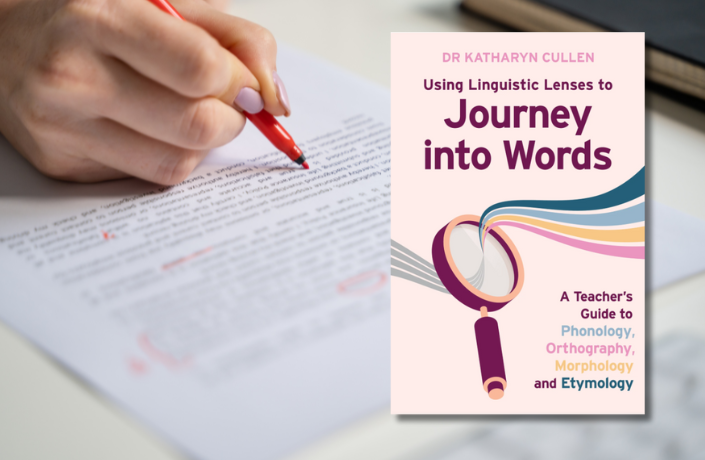
Discover why morphology and etymology are different Linguistic Lenses — and how understanding that distinction can transform the way teachers approach vocabulary, spelling and word study instruction.
“
Teachers are often taught morphology and etymology as if they are the same thing, but they operate as different Linguistic Lenses.
— Dr Katharyn Cullen
English teachers are frequently encouraged to “teach word parts”, yet morphology and etymology are not the same thing. Conflating them can limit students’ understanding of vocabulary, spelling and meaning.
This is not a typical vocabulary webinar.
This session, delivered by Dr Katharyn Cullen, introduces a research-informed Linguistic Lenses Framework that separates the Morphology Lens from the Etymology Lens, giving teachers a clearer way to understand how English actually works.
Participants will explore:
-
the critical difference between morphological bases and etymological roots
-
why cognates and eponyms belong to a different layer of language knowledge
-
how this distinction changes vocabulary instruction
-
why linguistic precision matters when teaching spelling, vocabulary and meaning
Most vocabulary professional learning collapses morphology, etymology, roots, bases, morphemes and word origins into one broad idea of “word study”. This session does the opposite.
Instead of blending concepts together, it builds clarity and precision. Teachers will learn how different forms of word knowledge operate through different Linguistic Lenses and why those distinctions matter for student learning.
The result is that students learn to decode and analyse words through a Morphology Lens, while also developing a deeper understanding of why English words are spelled the way they are through an Etymology Lens.
If terms like “silent letters” and “bossy e” are still shaping classroom instruction — or if teaching etymology is understood simply as studying Greek and Latin roots — this webinar will challenge and sharpen the way teachers think about words.
This session introduces a research-informed, peer-reviewed Linguistic Lenses Framework created by a teacher, for teachers, because effective word study needs more than theory. It needs classroom clarity about morphology, etymology and how English actually works.
By the end of this 1-hour session, participants will:
-
understand why morphology and etymology are distinct Linguistic Lenses for word study instruction
-
recognise the difference between a morphological base and an etymological root
-
understand why cognates and eponyms are not morphological relationships
-
see how linguistic precision strengthens vocabulary instruction
-
gain practical ways to bring clearer word study into classroom practice
Webinar Registration
Member Price
$0
Exclusively free for PETAA financial members.
REGISTER NOW
Non-member Price
$10*
*$10 credit redeemable on Katharyn Cullen courses
Can’t attend live? No problem! The webinar will be recorded and registrants will receive an emailed copy of the recording as soon as it is available.
|
Continue the Learning
Explore Dr Katharyn Cullen’s 10-hour PL program
Deepen your understanding of morphology, etymology, phonology and orthography through the Linguistic Lenses Framework.
|
View Program
|
Registration
Registration ends 23/06/2026 2:00 PM AUSEST